

Liverpool is a city with a remarkable ability to pack centuries of history, world-famous music, football, culture, architecture and entertainment into a relatively compact city centre.
Whether you are visiting for a weekend break, travelling with family, attending a football match, following in the footsteps of The Beatles or simply looking for somewhere different to explore, Liverpool has plenty to keep you busy.
For first-time visitors, the challenge is not finding things to do – it is deciding where to start.
From the historic waterfront and the Three Graces to the legendary Cavern Club, the city’s magnificent cathedrals, world-class museums and two famous football clubs, there is something for almost every type of traveller.
And because many of Liverpool’s best-known attractions are relatively close together, it is possible to see a great deal of the city in a short visit. For attractions further afield, such as Penny Lane, Strawberry Field, Anfield and the city’s southern suburbs, travelling by private chauffeur can make your day considerably easier.
Here are 10 of the best things to see and do in Liverpool, along with some ideas for getting the most from your visit.
1. Royal Albert Dock & Liverpool Waterfront

No visit to Liverpool is complete without spending some time on the waterfront.
The Liverpool Waterfront is one of the city’s defining sights, combining maritime history, impressive architecture, museums, restaurants, bars and some of the best views in the city.
At the heart of the waterfront is Royal Albert Dock, an extraordinary collection of historic dock buildings which now form one of Liverpool’s most popular visitor destinations. The dock is also home to several major attractions, making it an excellent place to begin exploring the city.
The area is particularly impressive when you take time to walk around rather than simply visiting one attraction. Follow the dockside paths, look across the River Mersey and take in the architecture of the old warehouses.
The waterfront is also where you will find the famous Three Graces at Pier Head:
- The Royal Liver Building
- The Cunard Building
- The Port of Liverpool Building
The Three Graces have become synonymous with Liverpool’s skyline and are a must-see for anyone interested in the city’s architecture and maritime heritage. The waterfront is also home to the famous Liver Birds, which have watched over the city for generations.
What can you do at Royal Albert Dock?
There is plenty to see within walking distance, including:
- The Beatles Story
- Merseyside Maritime Museum
- Tate Liverpool’s former dockside location and surrounding cultural attractions
- Restaurants, cafés and bars
- Independent shops
- The waterfront promenade
- The Museum of Liverpool nearby at Pier Head
Royal Albert Dock is also an excellent place to stop for lunch or an evening meal. With so many restaurants and cafés around the dock, it is easy to combine sightseeing with some time to relax.
A good starting point for your Liverpool visit
If you have only a few hours in Liverpool, Royal Albert Dock and the surrounding waterfront are an excellent starting point.
From here, you can walk towards the Pier Head, visit the Museum of Liverpool, see the Beatles statues and Royal Liver Building, or head into the city centre.
For visitors arriving by chauffeur, the waterfront is particularly convenient because it gives you access to several major attractions without needing to navigate city-centre parking.
2. Experience The Beatles in Liverpool

Liverpool and The Beatles are inseparable.
You do not have to be a lifelong Beatles fan to appreciate how important the band is to the city. Their story is woven into Liverpool’s streets, pubs, buildings and neighbourhoods.
For serious Beatles fans, however, Liverpool is something of a pilgrimage.
There are enough Beatles attractions to fill an entire day – or longer.
The Beatles Story
Located at Royal Albert Dock, The Beatles Story is an immersive museum taking visitors through the band’s rise from Liverpool musicians to international superstars.
The experience includes recreations of significant locations associated with the band’s career, original memorabilia and multimedia displays. Audio guides are available in multiple languages, making it particularly useful for international visitors.
The Cavern Club
Next, head towards Mathew Street and the famous Cavern Quarter.
The Cavern Club is one of Liverpool’s most recognisable music landmarks. The Beatles performed there almost 300 times during their early career, helping establish the venue as one of the world’s most famous live music clubs.
Today, the Cavern remains a working music venue, with live performances throughout the week.
Even if you are not particularly interested in The Beatles, stepping into the cellar and hearing live music in the surroundings is a memorable Liverpool experience.
Penny Lane
For the next part of your Beatles journey, head south towards Penny Lane.
The famous street is instantly recognisable to Beatles fans because of Paul McCartney’s song of the same name.
Visitors can see the famous street sign and explore the surrounding area, including locations associated with the song.
It is worth remembering that Penny Lane is a real residential neighbourhood rather than a traditional tourist attraction, so take the time to explore respectfully.
Strawberry Field

A little further on is Strawberry Field, the former Salvation Army children’s home immortalised in John Lennon’s Strawberry Fields Forever.
Today, visitors can go through the famous red gates and explore an interactive exhibition, gardens, café and visitor facilities. The exhibition looks at the history of Strawberry Field, John Lennon’s connection to the area and the story behind the famous song.
Make it a full Beatles day
If you want to see as much as possible, consider combining:
Royal Albert Dock → The Beatles Story → Beatles statues → Cavern Club → Mathew Street → Penny Lane → Strawberry Field
You can also visit John Lennon’s childhood home, Mendips, and Paul McCartney’s childhood home at 20 Forthlin Road. Both homes are preserved by the National Trust and advance booking is recommended.
A private chauffeur is particularly useful for a Beatles itinerary because several of these locations are outside Liverpool city centre and are much easier to visit as part of a planned route.
3. Take a Mersey Ferry River Explorer Cruise
Liverpool’s relationship with the River Mersey is fundamental to understanding the city.
For generations, the river has been central to Liverpool’s trade, migration, industry and identity. One of the best ways to appreciate the waterfront is therefore from the water itself.
The River Explorer Cruise provides a sightseeing trip on the famous Mersey Ferry, with the cruise lasting approximately 50 minutes.
As you travel along the river, you get a completely different perspective of Liverpool.
Look back towards the waterfront and you will see the Three Graces, Royal Albert Dock and the city skyline. You will also get views across towards the Wirral.

Why take the ferry?
The ferry is more than simply another way to see Liverpool.
It provides an opportunity to understand the geography of the city and its relationship with the river.
It is also a good option if you are travelling with children, as being out on the water provides a welcome change from museums and city streets.
When is the best time?
A clear day can provide excellent views, but do not dismiss Liverpool’s famously changeable weather. The waterfront can look spectacular under dramatic skies.
If you are visiting during the evening, look out for special evening cruises and events, which can provide a different atmosphere from the daytime River Explorer service.
It is worth checking the latest sailing times before travelling, as services and schedules can vary.
4. Experience Liverpool’s Football Heritage
Football is not simply a sport in Liverpool – it is part of the city’s identity.
Liverpool is home to two historic Premier League clubs, Liverpool FC and Everton FC, with both offering stadium experiences for visitors.
Anfield – Liverpool FC
For football fans, visiting Anfield is an obvious highlight.
The LFC Stadium Tour takes visitors behind the scenes at one of football’s most recognisable stadiums.
Depending on the tour, you can see areas including:
- The Players’ Tunnel
- The famous This Is Anfield sign
- The Home Team Dressing Room
- The Manager’s Dugout
- The Press Conference Room
- The LFC Museum
The museum also explores the club’s history and major successes, including its European Cup and Champions League triumphs.

Even if you are visiting Liverpool with someone who is not a football fanatic, the stadium experience can provide an interesting insight into the history and culture surrounding the club.
Hill Dickinson Stadium – Everton FC
Everton’s new waterfront home, Hill Dickinson Stadium, at Bramley-Moore Dock, provides another major attraction for football visitors.
The stadium tours give visitors behind-the-scenes access, including the first-team dressing room, press room, pitchside areas and views across Liverpool from the South Stand.
The stadium’s waterfront location also makes it an interesting addition to a wider Liverpool itinerary.

Planning a football-themed Liverpool trip
If football is the main reason for your visit, it can be useful to plan your transport around matchday traffic.
A chauffeur can collect you from your hotel, airport or railway station and take you directly to the stadium, avoiding the stress of finding parking in unfamiliar areas.
If you are visiting both stadiums, allow plenty of time between locations, particularly on matchdays.
5. Explore Liverpool’s Museums & Galleries
Liverpool is an excellent city for museums, and many visitors underestimate just how much there is to see.
For history and culture enthusiasts, you could easily spend an entire day exploring the city’s museums and galleries.
Museum of Liverpool
Located on the waterfront, the Museum of Liverpool explores the story of the city and its people.
It is an excellent introduction to Liverpool’s history, covering everything from the city’s maritime heritage to popular culture, social history, sport and music.
It is particularly useful for first-time visitors because it helps put many of the city’s other attractions into context.
World Museum

Close to Lime Street, World Museum covers a huge range of subjects, including natural history, archaeology, science and cultures from around the world.
It is a good choice for families because there is plenty to interest younger visitors as well as adults.
Merseyside Maritime Museum
Back at Royal Albert Dock, the Merseyside Maritime Museum explores Liverpool’s relationship with the sea.
The museum looks at subjects including maritime trade, migration, naval history and Liverpool’s role as a major port.
For anyone interested in Liverpool’s industrial past, this is well worth a visit.
International Slavery Museum
Liverpool’s maritime history cannot be separated from the history of transatlantic slavery.
The International Slavery Museum examines the history and legacy of the transatlantic slave trade and modern slavery.
It provides important historical context and is a significant part of understanding Liverpool’s development as a global port.
Walker Art Gallery

If art is more your thing, head to William Brown Street and the Walker Art Gallery.
The gallery houses an extensive collection spanning centuries, including Renaissance and medieval works, Victorian and Pre-Raphaelite art, Impressionist works and modern and contemporary pieces.
British Music Experience
For music lovers, the British Music Experience explores British music history through costumes, instruments, memorabilia and interactive displays.
It is another excellent addition to a Beatles-focused visit, while also covering a much broader range of British music.
Allow enough time
One of the biggest mistakes visitors make is trying to squeeze too many museums into one afternoon.
Instead, choose two or three based on your interests.
Liverpool’s museums cover an enormous range of subjects, so there is little point rushing through five attractions simply to say you have been.
6. Visit the Royal Liver Building 360
The Royal Liver Building is perhaps the most recognisable building on Liverpool’s waterfront.
Part of the Three Graces, the Grade I-listed building has become an emblem of Liverpool and is topped by the famous Liver Birds.
But rather than simply taking a photograph outside, visitors can go inside as part of the Royal Liver Building 360 experience.
The guided experience includes access to the building’s historic clock tower, an audio-visual presentation and panoramic views from the upper viewing area overlooking Liverpool and the River Mersey.
The view from above

For photographers, this is one of the most interesting ways to see Liverpool.
From the viewing platform, you can look across the waterfront and towards the city centre, while the River Mersey stretches away towards the horizon.
It also gives you a better appreciation of Liverpool’s architecture.
You can see how the historic waterfront connects with the modern city beyond it.
Allow time for the experience
This is not simply a lift to a viewing platform.
The guided tour tells the story of the building and takes visitors into parts of the structure that are not normally accessible.
If you are interested in architecture, history or photography, it is an excellent addition to your Liverpool itinerary.
7. Visit Liverpool’s Two Cathedrals
One of the most unusual things about Liverpool is that it has two very different cathedrals within relatively easy walking distance of one another.
They provide an interesting contrast in architecture, history and atmosphere.
Liverpool Cathedral
Liverpool Cathedral is the enormous Anglican cathedral at the southern end of the city centre.
Its sheer scale is impressive.
The building was designed by Sir Giles Gilbert Scott and dominates the Liverpool skyline.
Inside, visitors can appreciate the enormous vaulted spaces, stained glass, monuments and architectural details.
For panoramic views, you can also visit the cathedral tower. From the top, there are impressive views across Liverpool and the surrounding area.
Tower opening times can differ from the cathedral itself, so check the latest visitor information before travelling.
Liverpool Metropolitan Cathedral

At the opposite end of the city centre is the striking Metropolitan Cathedral of Christ the King.
Known locally simply as the “Met”, it is instantly recognisable because of its distinctive circular design and dramatic interior.
The Metropolitan Cathedral is the largest Catholic cathedral in England and welcomes visitors of all faiths and backgrounds.
Visitors can explore the cathedral, crypt and artwork, while guided and audio tours provide additional information about the building.
See both
The two cathedrals are close enough to make visiting both a realistic addition to a city-centre walking itinerary.
Together, they demonstrate two completely different approaches to religious architecture and are a great example of Liverpool’s architectural variety.
8. St George’s Hall & Liverpool’s Cultural Quarter
If you arrive at Liverpool Lime Street Station, one of the first buildings likely to catch your eye is St George’s Hall.
This magnificent neoclassical building stands at the heart of Liverpool’s cultural quarter and is one of the city’s most impressive architectural landmarks.
Liverpool City Council describes St George’s Hall as one of the finest examples of neoclassical architecture in the world.
But the building is only part of the attraction.
The surrounding area is home to several important cultural institutions, including:
- Central Library
- Walker Art Gallery
- World Museum
- St George’s Hall
- Liverpool Lime Street Station
- Liverpool Empire Theatre
William Brown Street
William Brown Street is particularly impressive because so many major cultural buildings are concentrated in one area.
It is an excellent place to explore on foot, particularly for visitors interested in architecture and history.
The steps and open space in front of St George’s Hall also provide excellent photo opportunities.
A great rainy-day option
Liverpool weather can be unpredictable, so this part of the city is particularly useful when the heavens open.
You can combine St George’s Hall with the Walker Art Gallery and World Museum without needing to travel far between attractions.
9. Take a Liverpool Hop-On Hop-Off Bus Tour
If you are visiting Liverpool for the first time, a hop-on hop-off bus tour can be one of the easiest ways to understand the layout of the city.
Liverpool’s city centre is compact and walkable, but several important attractions are spread further afield.
A sightseeing bus gives you an overview before you decide which places you want to explore in greater depth.
Liverpool City Sights
The Liverpool City Sights Hop-On Hop-Off City Tour operates a sightseeing route with multiple stops around the city.
The current tour is approximately a 50-minute loop and includes 14 stops, allowing passengers to get off and explore before continuing their journey. Live guides and multilingual audio commentary are available depending on the service.

Why it works well for visitors
A sightseeing bus is particularly useful if:
- You only have one day in Liverpool
- You are visiting for the first time
- You are travelling with children or older relatives
- You want an overview before exploring independently
- You want to see attractions outside the immediate city centre
- You would rather not walk several miles
It can also be a useful way of spotting areas you might otherwise miss.
Liverpool is made up of distinctive neighbourhoods and quarters, each with its own personality, including the Waterfront, Cavern Quarter, Ropewalks, Georgian Quarter, Baltic Triangle and St George’s Quarter.
10. Liverpool ONE, Cavern Quarter & Liverpool City Centre
Once you have explored Liverpool’s history and attractions, leave some time simply to enjoy the city.
Liverpool’s city centre has a lively mixture of shopping, restaurants, bars, entertainment and nightlife.
Liverpool ONE
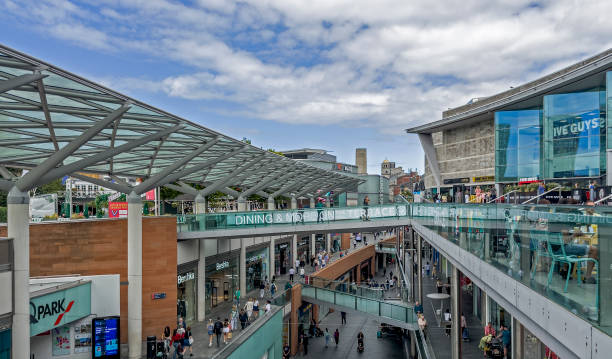
Liverpool ONE is one of the city’s main shopping and entertainment destinations.
The complex includes more than 170 shops, restaurants and leisure experiences, as well as Chavasse Park, a cinema and a range of entertainment venues.
It is particularly convenient for visitors because it sits within walking distance of many of Liverpool’s main attractions and the waterfront.
You can spend a few hours shopping, have lunch, grab a coffee or simply use it as a base between sightseeing stops.
Cavern Quarter
For something completely different, head towards Mathew Street and the Cavern Quarter.
This is where Liverpool’s musical heritage comes alive.
The area around the Cavern Club is filled with music venues, bars, restaurants, Beatles memorabilia and landmarks associated with Liverpool’s music history.
The Cavern Club remains the obvious highlight, but it is worth exploring the surrounding streets rather than simply arriving at the club and leaving again.
Ropewalks
Ropewalks provides another side of Liverpool.
The district takes its name from the rope-making industry that once supplied the city’s shipping trade.
Today, Ropewalks is known for independent shops, restaurants, bars, galleries and nightlife.
Bold Street is particularly popular for its international food scene and independent businesses, while nearby streets such as Seel Street, Fleet Street and Concert Square are well known for their nightlife.
An evening in Liverpool
If you have a full day in the city, a great way to finish is to move from sightseeing into dinner and drinks.
You might start at the waterfront, walk through Liverpool ONE, explore the Cavern Quarter and then continue towards Ropewalks.
There is no need to rush – Liverpool is at its best when you give yourself time to wander.
How Many Days Do You Need in Liverpool?
You can see some of Liverpool in a day, but two or three days in Liverpool gives you considerably more flexibility.
One day in Liverpool
If you only have one day, concentrate on the city centre.
A possible itinerary could be:
Morning
Royal Albert Dock → The Beatles Story → Liverpool Waterfront
Afternoon
Museum of Liverpool → Royal Liver Building → Mersey Ferry
Evening
Liverpool ONE → Cavern Quarter → dinner and live music
Two days in Liverpool
With two days, you can add some of the attractions outside the immediate waterfront area.
Day One
Waterfront → Royal Albert Dock → Beatles Story → Museum of Liverpool → Royal Liver Building → Cavern Quarter
Day Two
Anfield or Hill Dickinson Stadium → Penny Lane → Strawberry Field → Liverpool’s Cathedrals → St George’s Quarter
Three days in Liverpool
Three days allows you to slow down and enjoy the city rather than constantly moving from one attraction to the next.
You could add:
- More museums and galleries
- A longer Beatles itinerary
- Both football stadiums
- Ropewalks
- Georgian Quarter
- More time around the waterfront
- Shopping at Liverpool ONE
- Evening entertainment
- A longer Mersey Ferry experience
Getting Around Liverpool
Liverpool city centre is relatively compact, and many of the major attractions can be reached on foot.
However, some of the attractions visitors most want to see are outside the immediate centre.
Penny Lane, Strawberry Field, Anfield and the childhood homes associated with The Beatles are good examples.
This is where planning your transport can make a significant difference.
Exploring Liverpool by chauffeur
For visitors travelling as a family, couple, corporate group or small party, a private chauffeur can make it easier to build a day around the places you actually want to see.
Rather than repeatedly finding taxis, navigating unfamiliar roads or looking for parking, you can arrange a journey around your itinerary.
For example, a Beatles day could combine:
Liverpool Waterfront → Royal Albert Dock → Cavern Quarter → Penny Lane → Strawberry Field → Woolton
A football-focused day could combine:
Hotel or Liverpool Lime Street → Anfield → Liverpool city centre → Hill Dickinson Stadium
And for visitors arriving from further afield, a chauffeur can provide a comfortable connection between Liverpool, Liverpool John Lennon Airport, Manchester Airport, hotels and other destinations across the North West.
Final Thoughts: Discover Liverpool Your Way
Liverpool is a city that rewards curiosity.
You can come for The Beatles and discover maritime history. You can come for football and discover incredible architecture. You can come for the museums and end up spending the evening listening to live music in the Cavern Quarter.
That is what makes Liverpool such an enjoyable destination.
The Royal Albert Dock and waterfront provide the perfect introduction to the city’s maritime heritage. The Beatles attractions reveal the story of Liverpool’s most famous musical exports. The Mersey Ferry offers a different perspective of the city, while Anfield and Hill Dickinson Stadium showcase the passion Liverpool has for football.
Elsewhere, the city’s museums, galleries, cathedrals and historic buildings provide plenty for anyone interested in art, architecture and history.
And when the sightseeing is finished, Liverpool ONE, the Cavern Quarter and Ropewalks offer plenty of opportunities to eat, drink, shop and experience the city’s famous nightlife.
Whether you are planning a weekend in Liverpool, a family day out, a Beatles tour, a football trip or a corporate visit, there is plenty to discover.
And if you want to see more of the city without worrying about the driving, parking or logistics, Amethyst Chauffeurs can help make your Liverpool journey comfortable, convenient and tailored around your plans.
Plan Your Liverpool Chauffeur Journey with Amethyst Chauffeurs
Visiting Liverpool should be about enjoying the city, not worrying about where to park or how to get from one attraction to the next.
From airport transfers and hotel transfers to private sightseeing trips, Beatles tours, football visits and special occasions, a chauffeur service can give you the freedom to concentrate on your day.
Planning a trip to Liverpool? Get in touch with Amethyst Chauffeurs to discuss your journey and create a private Liverpool itinerary around the places you want to see.
Please note: attraction opening times, tour availability, ticket prices and transport schedules can change. Visitors should check the attraction’s official website before travelling, particularly around matchdays, special events and public holidays.